The aesthetic and functional transformation of railings through powder coating is a modern and efficient process that enhances both appearance and durability. Powder coating, a dry finishing process, has become increasingly popular across various industries due to its superior quality and environmental benefits. This technique provides a high-quality, long-lasting finish, making it an ideal choice for both residential and commercial railing projects.
Understanding Powder Coating
Powder coating is a method used to apply a protective and decorative finish to metal and other materials. This technique involves applying a dry powder through an electrostatic process and then curing it under heat. The result is a smooth, durable, and uniform coating that is resistant to chipping, scratching, and fading.
Benefits of Powder Coating
- Durability: Powder-coated surfaces are more resistant to damage compared to traditional paint.
- Environmentally Friendly: The process produces less waste and does not require solvents, making it a greener option.
- Variety of Finishes: Available in a wide range of colors and textures, allowing for customization.
- Cost-Effective: While the initial cost may be higher, the longevity of the finish reduces the need for frequent reapplications.
- Corrosion Resistance: Powder coating creates a barrier against corrosive elements, prolonging the life of the railing.
Find additional information about the benefits of powder coating here.
Applications in Railing Projects
Powder coating is particularly beneficial for railings, which are often exposed to harsh weather conditions and heavy use. It is used in various settings, including:
- Residential Properties: Enhancing the curb appeal and upkeep of balconies, staircases, and garden fences.
- Commercial Buildings: Providing a professional and polished look to office buildings and public facilities.
- Industrial Settings: Offering robust protection for safety railings and barriers.
Explore further insights here on how powder coating can be applied to different railing projects.
The Powder Coating Process
The powder coating process involves several key steps to ensure a high-quality finish:
Surface Preparation
Proper surface preparation is crucial for the success of powder coating. This step involves cleaning the surface to remove any dirt, grease, or rust, ensuring optimal adhesion of the powder.
Application of the Powder
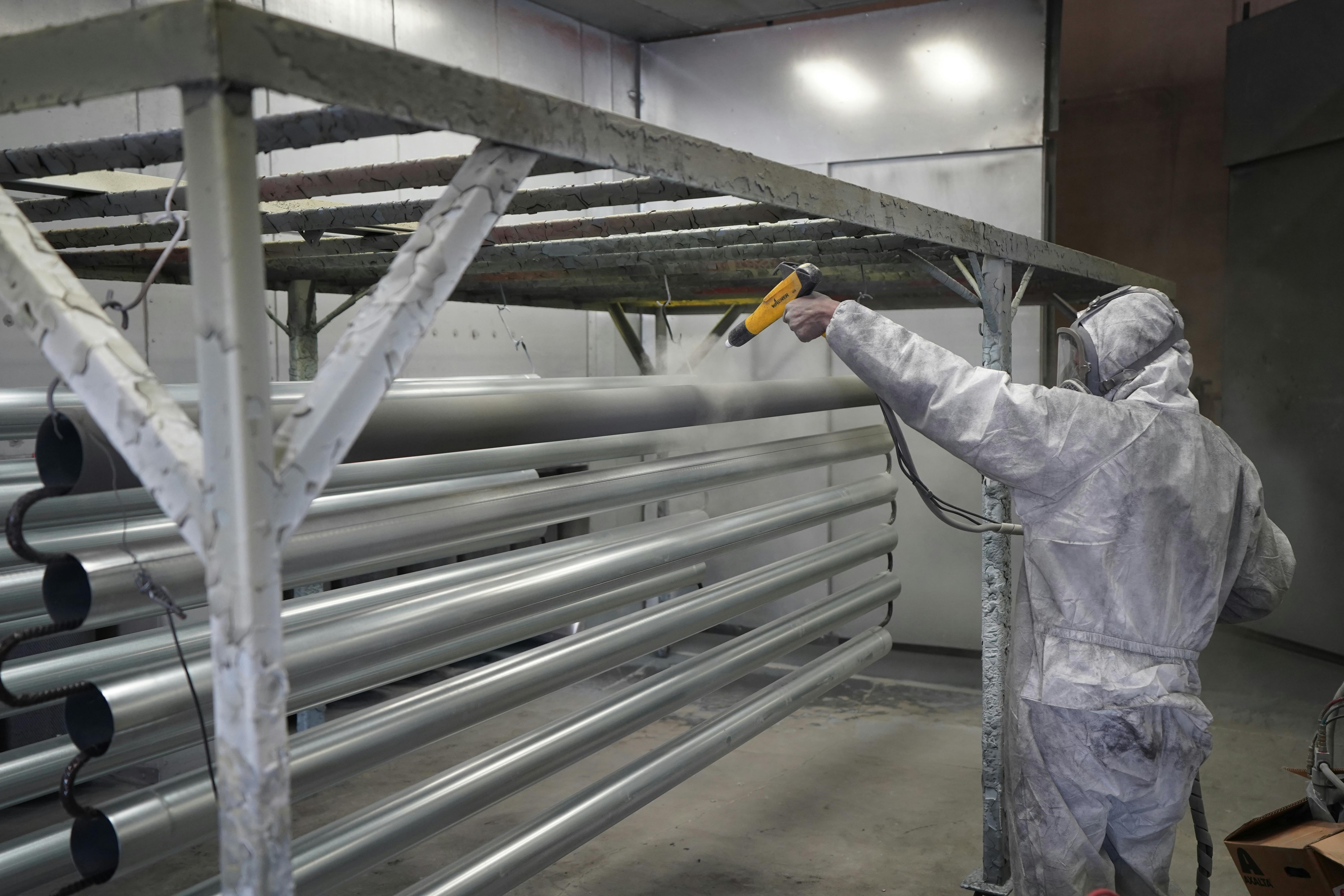
The powder is electrostatically charged and sprayed onto the surface. The charged particles adhere to the surface until heated and fused into a solid coating.
Curing
Once applied, the coated item is placed in a curing oven, where the powder melts and forms a uniform film. The temperature and time in the oven depend on the material and thickness of the coating.
Read more about this topic in this detailed guide.
Choosing the Right Powder Coating
Selecting the appropriate powder coating involves considering factors such as the environment, desired appearance, and specific requirements of the project. Here are some tips to help make an informed decision:
- Consider the Environment: Assess the exposure to elements like sunlight, moisture, and chemicals.
- Choose the Right Finish: Select a finish that complements the design and aesthetic of the space.
- Evaluate Performance Needs: Identify the performance characteristics required, such as UV resistance or anti-graffiti properties.
Learn more about making the right choices in powder coating here.